
Pick the trailer by the campsite you actually want, not by the floorplan you fall in love with at the dealership — because combined vehicle length is the number that decides whether you get in, and it is the one most buyers never check before signing. A 40 ft limit at Madison Campground in Yellowstone (motorhome plus towed vehicle, or truck plus trailer) sounds generous until you add a crew-cab pickup to a 28 ft bunkhouse and find yourself over. Get the length math right first, then work backward through tow capacity, floorplan, and build quality. Everything below is the sequence I'd walk a friend through.
Length limits: the constraint that eliminates trailers before you ever tow one
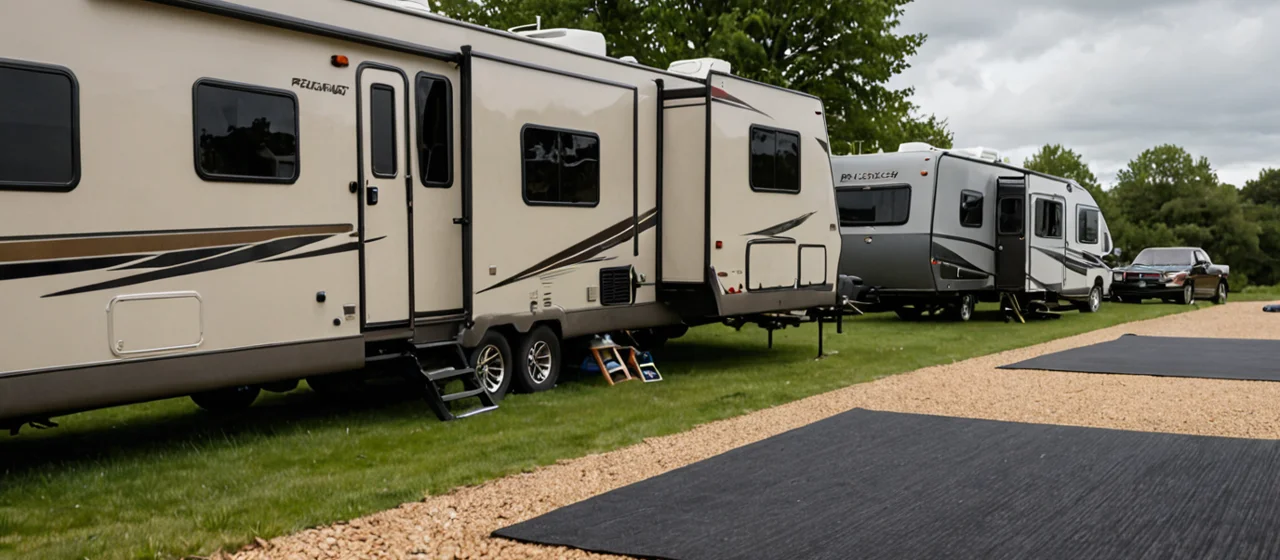
National park campgrounds publish combined-length limits, and they are enforced at the gate. Yellowstone's Madison Campground and Fishing Bridge RV Campground both typically cap combined vehicle length at 40 ft. Olympic's Kalaloch Campground typically caps at 35 ft. Heart o' the Hills Campground in Olympic is strict at 21 ft combined — which rules out every travel trailer setup except a very small trailer behind a very small tow vehicle, and realistically rules out most of them.
"Combined" is the word that trips people up. Your trailer's box length is not the number. You add the tow vehicle's bumper-to-hitch distance, the trailer's tongue-to-tail length, and any hitch extension or bike rack that sticks out the back. A trailer marketed as a "24-footer" often measures closer to 27 ft tongue to tail once you account for the tongue and rear bumper. Put that behind a full-size pickup and you are already past the 21 ft ceiling before you've loaded a cooler.
The practical move is to build a shortlist of five or six campgrounds you genuinely intend to camp at in the next two years, look up each one's published combined limit, and take the smallest of those numbers as your hard ceiling. That number, not the tow rating, should drive your trailer search. The trade-off is real: a trailer short enough for a tight forest-service loop will feel cramped on a two-week road trip, and you may end up choosing between the campsite you want and the interior you want. Most people who camp primarily in developed private parks can ignore this entirely; most people who bought an RV to stay in national parks cannot.
Towing capacity is a payload problem in disguise
Match the trailer's gross weight — fully loaded, water tank full — to roughly 80 percent of your tow vehicle's rated capacity, not to the dry weight on the spec sheet. Dry weight is a fiction. It excludes water, propane, battery, and everything you own. A trailer with a 6,000 lb dry weight and a 7,800 lb gross vehicle weight rating will weigh 7,800 lb the day you leave for a boondocking trip with full fresh water.
The number that actually gets exceeded first is payload, not tow rating. Payload is the yellow sticker on your driver's door jamb: the total weight of passengers, cargo, fuel, hitch hardware, and tongue weight your truck can carry. Tongue weight typically runs 10 to 15 percent of loaded trailer weight, and that weight sits directly on the truck. A family of four, a generator in the bed, and a 700 lb tongue weight can max out a half-ton pickup's payload long before the trailer itself approaches the tow rating. You feel this as a sagging rear end, steering that wanders on grooved highway, and headlights pointing at the trees.
Half-ton pickups handle most trailers under about 7,000 lb gross comfortably. Above that, a three-quarter-ton truck is the honest answer, and the fuel economy penalty and rougher unloaded ride are the cost of getting there. Weight-distributing hitches help with sway and leveling but do not increase payload — they redistribute load across the truck's axles, and the scale doesn't care.
Travel trailer versus motorhome: the length math cuts differently
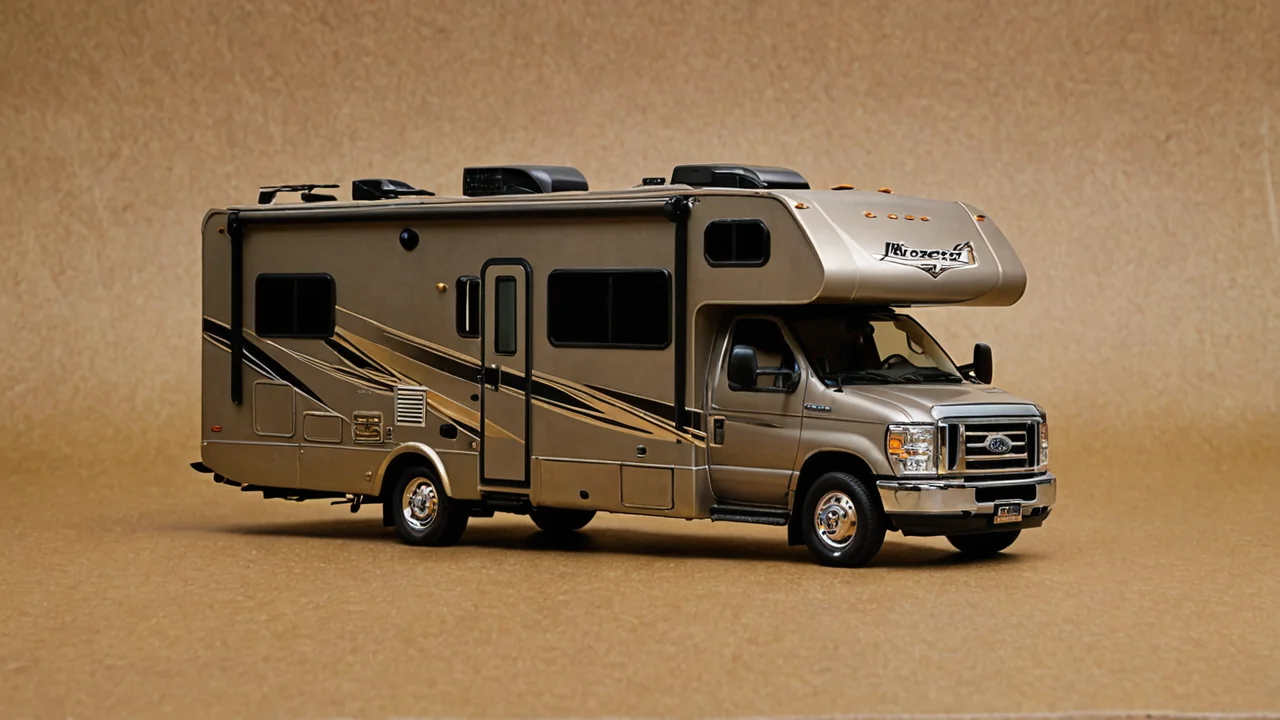
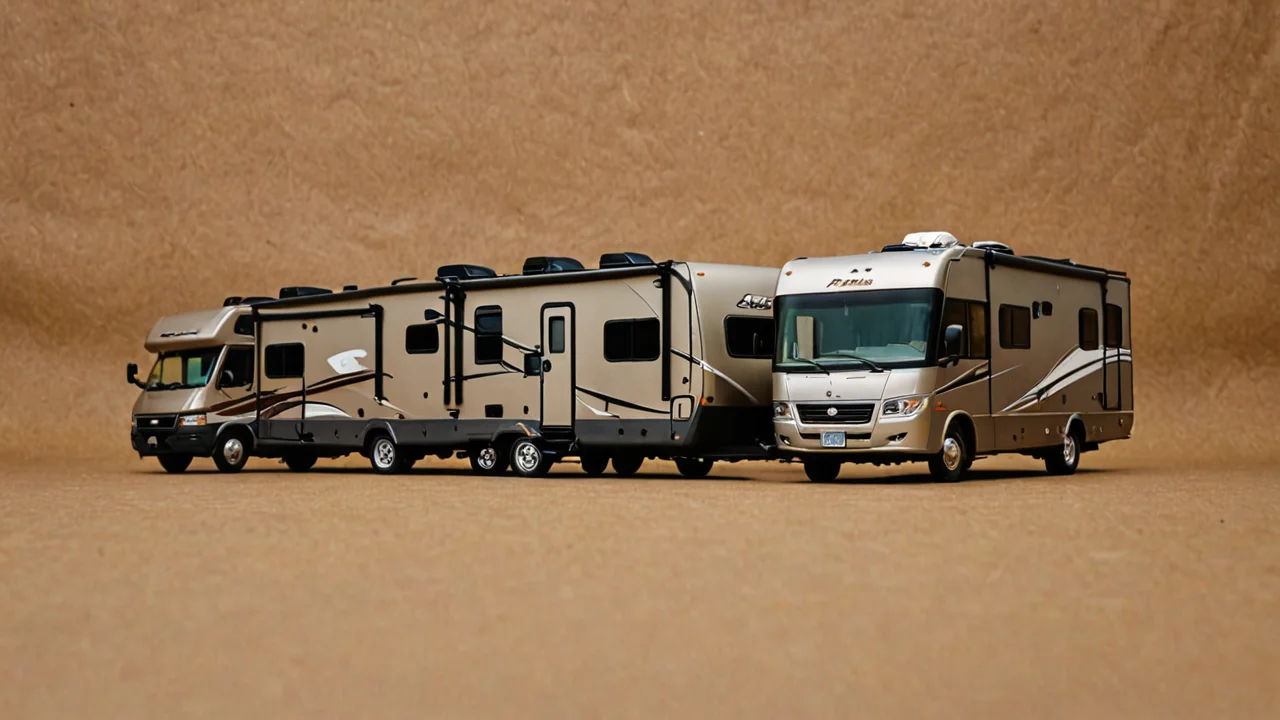
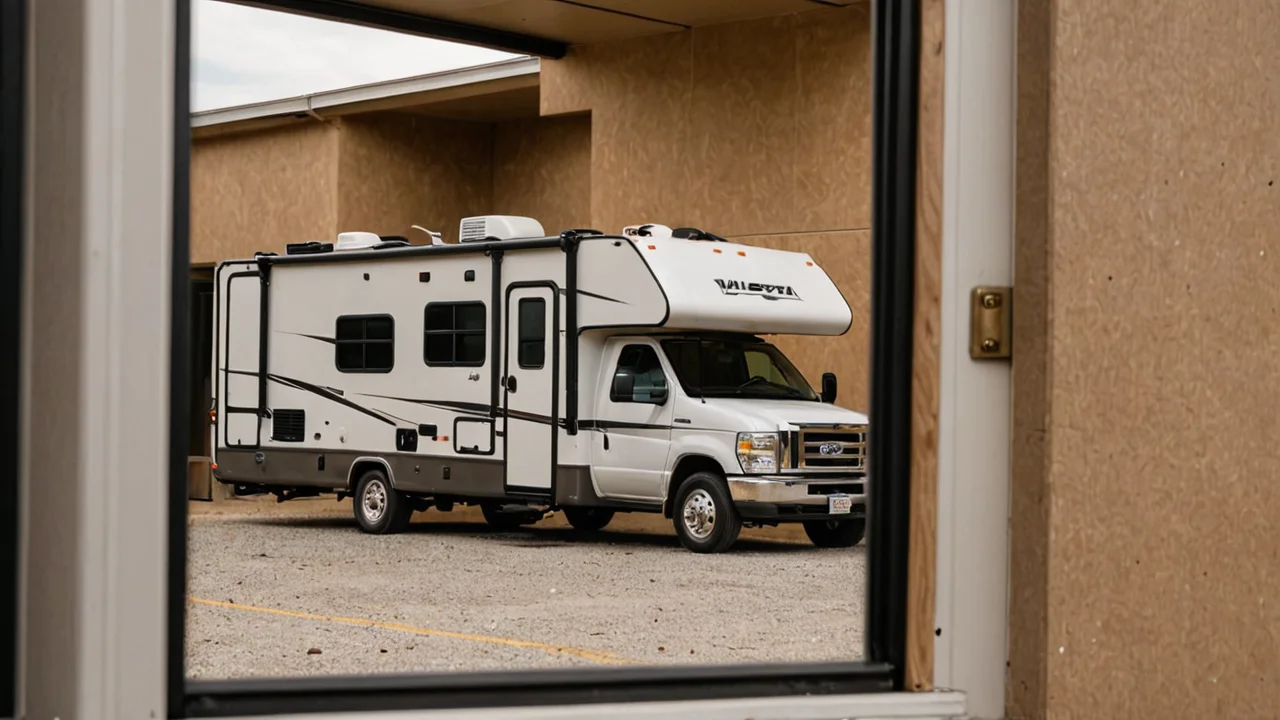
A travel trailer is a towable RV with living quarters hitched to a separate tow vehicle; a Class A motorhome is a bus-shaped, self-propelled RV built on a bus or heavy commercial truck chassis with driving compartment and living quarters combined into one continuous interior; a Class C is built on a cutaway van or light truck chassis with a cab-over section above the driver's area; a Class B is a camper van built inside a standard commercial van body with the original cab retained.
For campsite length limits, the travel trailer has one huge advantage: unhitch at the site and the tow vehicle no longer counts against your combined length when you're maneuvering, though the published limit is measured with the trailer attached at the gate. A motorhome towing a car has a combined length that never shrinks, and a Class A with a flat-towed dinghy easily blows past 40 ft. A Class B camper van, by contrast, is the only type that slips under a 21 ft combined limit without compromise.
The travel trailer trade-off is setup time: leveling, unhitching, deploying stabilizers, connecting water and power, and then repeating it in reverse. Fifteen to thirty minutes each way is normal. A motorhome is faster to break camp but locks you into driving your living room to the grocery store, or into the extra cost and complexity of a towed car. If you move every day, the motorhome wins on effort. If you base-camp for a week at a time, the trailer wins on space per dollar and on the campsite you can actually fit into.
Floorplan decisions in the order they bite you
Sleeping capacity is the first filter, and it is where most families overshoot. Bunkhouse trailers sleep six on paper, but the paper assumes small children. Two adults and two teenagers in a bunkhouse with a single 30-amp service means someone is tripping the breaker every time the microwave and the air conditioner run together. Slide-outs add floor space but add weight, add a failure point, and can block access to the bathroom when retracted — a real problem on a highway pull-off lunch stop.
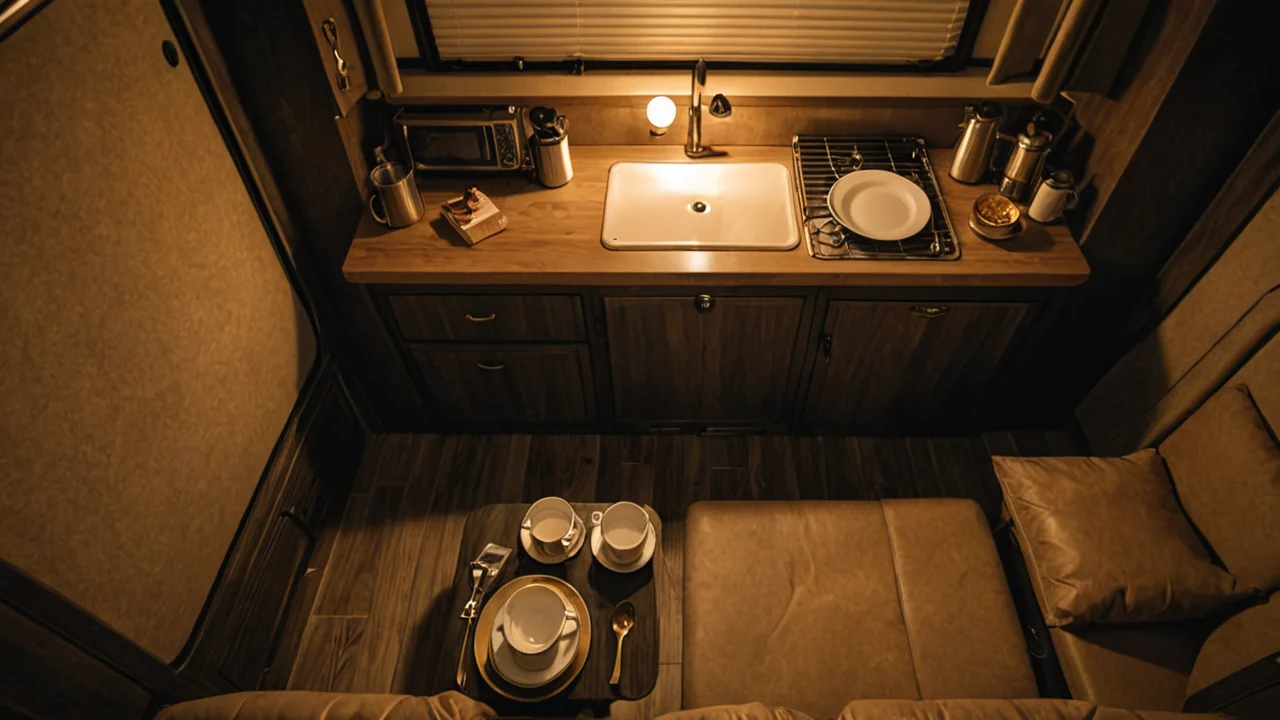
The kitchen and bath are where full-timers and weekenders diverge. A trailer with a wet bath (shower and toilet in one molded unit) saves space and weight but is miserable for daily use by more than one person. A tankless water heater sounds great until you're boondocking and the model requires a minimum flow rate your pump can't sustain. Look at tank sizes: fresh, gray, and black capacities determine how many days you can go without hookups, and gray water fills first in almost every trailer because showers and sinks generate it faster than the black tank fills.
Walk the floorplan with the slides in. Open every cabinet and drawer with the slides retracted, because that's the configuration you'll live in at a rest stop. Sit on the toilet with the door closed. Stand in the shower. Lie on the bed and check whether you can get out of it without climbing over your partner. These sound like trivial checks and they are the ones people skip.
Construction, insulation, and the four-season question
Most travel trailers are three-season at best, and "four-season" or "all-season" badges mean wildly different things between manufacturers. The honest signals are tank heating pads, enclosed and heated underbelly, double-pane windows, and a furnace ducted into the underbelly rather than just the living space. A trailer without those will have its fresh water line freeze on the first hard frost, usually at the inlet fitting, and you'll discover it as a puddle under the sink at 6 a.m.
Winterizing is the flip side. RV-specific antifreeze rated for burst protection to -50 °F is the standard for blowing out and filling the water system before storage, and getting all of it — the water heater bypass, the low-point drains, the toilet valve, the outdoor shower — matters more than the product. A single forgotten low-point drain cracks a fitting over the winter and you find out the following spring.
Construction method is the other long-term cost. Aluminum framing is lighter and resists rot better than wood; laminated walls are stiffer but harder to repair; a fiberglass exterior holds up better than aluminum siding against hail and tree branches. None of these are visible from a showroom walk-through, so ask for the wall cross-section drawing and the roof material. Rubber roofs need resealing every year or two; fiberglass roofs cost more up front and less over time.
Buying used changes the calculus. A trailer a few years old has already had its warranty issues shaken out — the leaking skylight, the failed converter, the slide that wouldn't retract — and the previous owner either fixed them or didn't. Inspect the roof seams, the corners where the siding meets the frame, and the floor around the toilet and shower for soft spots. Those are the failure points that cost real money.
What it actually costs to own, beyond the sticker
Budget for the accessories the dealer doesn't include and that you cannot camp without: a weight-distributing hitch with sway control, a brake controller if your truck isn't pre-wired, sewer hose and fittings, fresh water hose, leveling blocks, wheel chocks, and a surge protector or EMS. That bundle runs several hundred to well over a thousand dollars depending on how much you buy at once, and none of it appears on the trailer's price tag.
Recurring costs stack up: insurance, registration, storage if you don't have room at home, and maintenance. Tires age out before they wear out — trailer tires typically need replacing on a calendar schedule regardless of tread depth — and bearing repacking and roof resealing are annual or biennial line items. A trailer stored outdoors in a freeze-thaw climate needs winterizing every year, and a trailer stored indoors costs a monthly fee that can rival a car payment.
The honest trade-off is that a travel trailer is cheaper per square foot of living space than any motorhome, and more expensive in time than any of them. If your weekends are short and your patience for setup is thin, a Class B camper van costs more and asks less. If you want the most space for the least money and you're willing to spend an hour on arrival and departure, the trailer is still the right answer for most people.
| Decision | Check this first | What it costs you if you get it wrong |
|---|---|---|
| Campsite access | Smallest combined-length limit among your target campgrounds | Turned away at the gate; a trailer you can't use where you want |
| Tow vehicle match | Payload sticker, then 80% of tow rating against loaded trailer weight | Sag, sway, brake wear, and an overloaded truck |
| Type (trailer vs. motorhome) | How often you move versus how long you stay | Setup fatigue, or paying for a towed car you didn't plan on |
| Floorplan | Slides retracted, tanks sized for your camping style | Living in a corridor; gray water overflowing on day three |
| Construction | Underbelly heat, roof material, wall cross-section | Frozen lines, annual resealing, soft floors |
| Total cost | Hitch, hoses, storage, tires, winterizing | A budget blown before the first trip |
The order matters because each decision constrains the next. Length limits set your maximum trailer size; size sets your tow vehicle requirement; tow vehicle sets your payload ceiling; payload and floorplan together set what you can actually carry and sleep. Start anywhere else and you'll end up at the scale, or at the campground gate, finding out.
Where the trailer search itself goes wrong
The trailer search fails most often at the dealer's lot, not on the road. Dealerships stock floorplans that sell, and what sells is interior space, so the units on the lot trend long and heavy — exactly the ones that blow past a tight combined-length ceiling. If your hard number came out at or under Heart o' the Hills' 21 ft combined limit, you are not going to find that unit by walking a row of new inventory. You will find it in the used market, in the small molded-fiberglass and lightweight categories, or by ordering and waiting. Budget for that search taking longer than you expect, and be willing to walk away from a good deal on a trailer that is 3 ft too long.
Ask for the actual tape measurement before you commit, tongue coupler to rear bumper, with the spare tire and any rear rack included. Brochure lengths frequently describe the box, not the whole unit, and the difference is the margin you were counting on.
Matching the tow vehicle before you shop trailers
Read the yellow payload sticker on the driver's door jamb before you look at a single trailer, then subtract passengers, fuel, hitch hardware, and the gear you plan to carry in the bed. What remains is your real tongue-weight budget, and since tongue weight typically runs 10 to 15 percent of loaded trailer weight, that budget — not the tow rating — sets your maximum trailer gross weight. Work the arithmetic backward and you have a weight ceiling to shop against before you ever set foot on a lot.
Half-ton pickups handle most trailers under about 7,000 lb gross comfortably; above that, a three-quarter-ton truck is the honest answer, with the fuel penalty and rougher unloaded ride as the cost. The limit of this approach is that it assumes you'll load the truck the way you say you will — the family that adds a generator, a cooler, and firewood after the fact is the one that ends up at the scale over payload, with headlights pointing at the trees.